In short
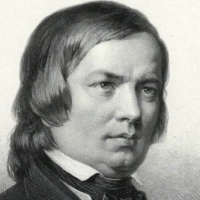
Robert Schumann was a German composer and critic who made the piano speak in fragments, moods, and hidden messages, then went on to write symphonies, songs, and chamber works of striking imagination. He championed young talent as a writer, married the pianist Clara Wieck after a hard-won courtail, and packed his music with literary references and private codes. His songs and piano cycles remain central to how Romantic music sounds today.
What the music sounds like
Schumann's piano music often moves in short character pieces, sometimes only a minute or two long, strung into a cycle like beads: a march gives way to a waltz, a lullaby to a burst of stamping energy. He frequently invented nicknames or literary tags for these pieces, and used a recurring four-note motif or two contrasting "characters" (he called them Florestan and Eusebius) to represent opposite sides of his own temperament, one impulsive, one dreamy. Textures are thick with inner voices and syncopation, so the melody sometimes hides just under the surface.
His orchestral works favor rich, sometimes dense scoring, with horns and woodwinds doubling the strings closely, and movements that flow into one another without pause. Symphonies tend to open with a slow introduction before a vigorous main theme arrives. His songs pair voice and piano as equals, the piano often continuing to speak in a short postlude after the singer has finished, as if the thought were not quite done.
Where to start
- Piano Quintet in E flat major, Op. 44 A warm, big-hearted chamber work that shows Schumann writing for piano and strings at their most confident.
- Symphony No. 1 in B flat major, Op. 38 "Spring" His first symphony, full of open-air optimism and a great place to hear his orchestral voice.
- Kinderszenen, Op. 15 Short, vivid piano miniatures depicting childhood, including the famous 'Träumerei', ideal first Schumann.
Life
Robert Schumann was born in 1810 in Zwickau, Germany, the son of a bookseller. He grew up steeped in literature as much as music, and that double life never left him. He studied law briefly at his mother's insistence, then abandoned it for the piano, training seriously in Leipzig with Friedrich Wieck, whose daughter Clara was already a celebrated child prodigy.
An injury to his hand curtailed his own ambitions as a performer, so Schumann turned to composing and writing. He founded a music journal, the Neue Zeitschrift für Musik, where he championed composers he admired, including a young Johannes Brahms. He married Clara Wieck in 1840 after years of opposition from her father, and the marriage became a genuine creative partnership; both composed and performed, and Robert often set to music the poetry they read together.
The 1840s and early 1850s brought a widening range of works: symphonies, a piano concerto, chamber music, and choral pieces followed the piano cycles and song collections of his twenties. Schumann also worked as a conductor, holding a post in Düsseldorf, though the job proved difficult for him. His mental health declined sharply in the 1850s. In February 1854 he attempted suicide and was admitted, at his own request, to a private asylum near Bonn. He remained there until his death in 1856, cared for from a distance by Clara, who was advised against frequent visits.
Written by OrchestraFinder, reviewed September 2026.